9 May 2026
How I Used ChatGPT for Zone 2 Running and Better Aerobic Fitness
An everyday runner's experience of using ChatGPT to understand easy effort, reflect on heart rate patterns and build a more consistent approach to aerobic fitness—without chasing pace.
You do not need a race goal or a target pace to want running to feel easier. As an everyday runner, I wanted to improve my aerobic fitness, understand what an easy run should feel like, and stop turning every outing into a hard workout.
My version of easy was usually somewhere around 135 to 145 bpm. It felt controlled. It felt productive. It felt like I was doing the right thing.
But my easy runs often became moderate runs. I was looking at the numbers on my watch without paying enough attention to whether the effort felt comfortable or how well I recovered afterwards.
I needed to get more comfortable with genuinely easy running, rather than treating every run as a test of fitness.
This is how I used ChatGPT to reflect on my runs, notice patterns in effort and heart rate, and take a more consistent approach to aerobic fitness. The focus is everyday running, not faster splits or longer distances.
The Problem With Running Apps
Most running apps give you data. They show pace, splits, heart rate, cadence, training load, recovery scores, and predicted race times. Some now add AI-style summaries. But most still do not really coach you. They do not deeply understand context.
If you upload a run where your heart rate drifted unusually high, you slept badly, your legs were sore from gym work, the run was stop-start, or you were intentionally running slowly to build aerobic base, the app usually treats it as another isolated data point.
It might tell you the run was "productive" or "maintaining", but it does not really help you understand what happened or what you should do next. The feedback loop is too weak.
Support Between Runs
A good coach can help you understand the bigger picture and adjust your running to suit your needs. But many everyday runners do not have a coach, and even those who do may still have questions between check-ins.
My questions were usually simple: did that run actually feel easy? Why was my heart rate higher today? Am I still tired from the last session? Would a gentler outing or a rest day make more sense?
That is where I found ChatGPT useful: as a way to organise my observations and ask better questions, not as a replacement for coaching expertise or my own judgement.
What I Did Instead
I started using ChatGPT as a running reflection tool. Rather than asking for a race plan, I explained that I wanted easy runs to feel more comfortable and to build aerobic fitness through a routine I could maintain.
Instead, I used it as an adaptive feedback system. After almost every run, I uploaded screenshots from Strava or Garmin and asked ChatGPT to analyse them.
The process became: run, upload screenshots, summarise data, interpret, adjust next run, repeat. That feedback loop became the training system.
The Screenshot Workflow
One thing I learned quickly was that the model needed structured memory. So after uploading screenshots, I would ask ChatGPT to summarise the run into a table.
Usually I uploaded two or three screenshots:
- Headline run summary: distance, average pace, average heart rate, moving time
- Mile-by-mile splits: pace by mile, heart rate by mile
- Optional: a heart rate graph or a note about how the run felt
For split data, the format I used looked like this:
| Mile | Pace | HR |
|---|---|---|
| 1 | 12:15 | 125 |
| 2 | 12:22 | 130 |
| 3 | 12:15 | 130 |
| 4 | 12:15 | 128 |
This turned the screenshots into a simple running log. Pace was there for context, not as a score to beat. I also added how the run felt, how I had slept and whether I felt recovered.
Key insight: The screenshots were not the system. The feedback loop was the system.
The Biggest Discovery: I Was Running Easy Runs Too Hard
The biggest breakthrough was simple. I was running my easy runs too hard.
Historically, I thought 135 to 145 bpm was easy for me. It felt manageable. It felt like I was training. But I was often drifting into moderate effort. I was not recovering properly, and I was not building the aerobic base I thought I was building.
The conversations kept bringing me back to a simple question: could I make the effort easier rather than trying to hold a particular pace?
At first, slowing down felt like going backwards. Some runs included walk breaks. My heart rate was often around 125 to 130 bpm, but those were my own readings, not a Zone 2 target for anyone else.
But the data started to change.
Noticing More Comfortable Effort
At the start, I often needed to slow down or walk to keep the effort comfortable. Over time, my logs showed more settled heart rate readings and less stop-start running. These are personal observations, not targets or proof that ChatGPT caused a fitness improvement.
| Phase | HR | Feel |
|---|---|---|
| Early | 127 to 135 bpm | Frustrating, stop-start |
| Middle | 125 to 130 bpm | More controlled, less drift |
| Recent | 125 to 130 bpm | Stable, low drift |
What mattered to me was a more comfortable, repeatable effort—not a faster number on the watch. I wanted easy running to fit into everyday life without leaving me feeling that every session had been a workout.
Optional Example: Reading Run Screenshots
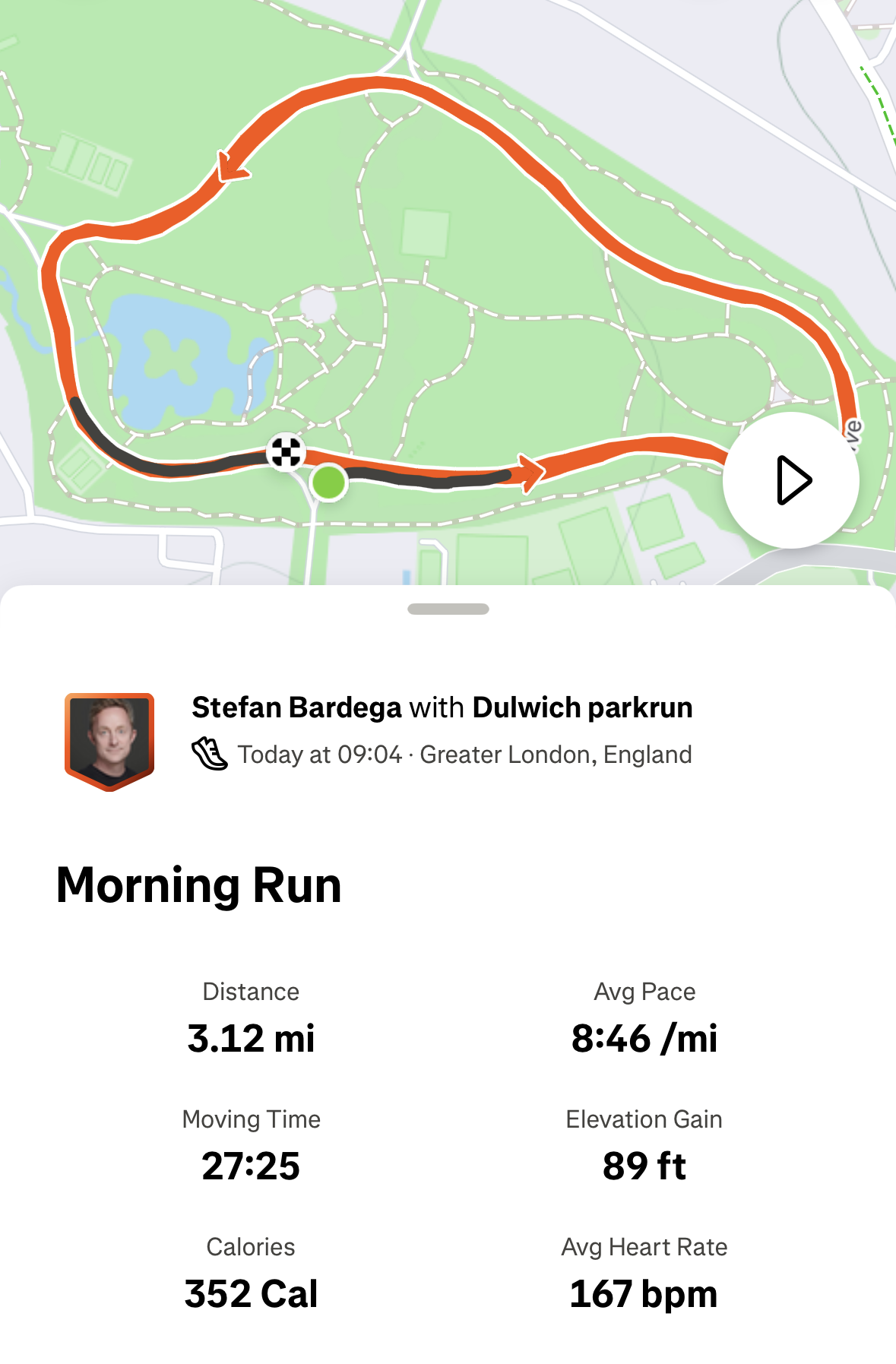
The screenshots below come from a harder Parkrun, not a Zone 2 session. They show the kind of information I shared with ChatGPT, but the times and heart rates are not targets for an easy run. You can use the same process with an ordinary, comfortable outing.
View the example screenshots and personal run data
The split view added context that the headline summary did not show:
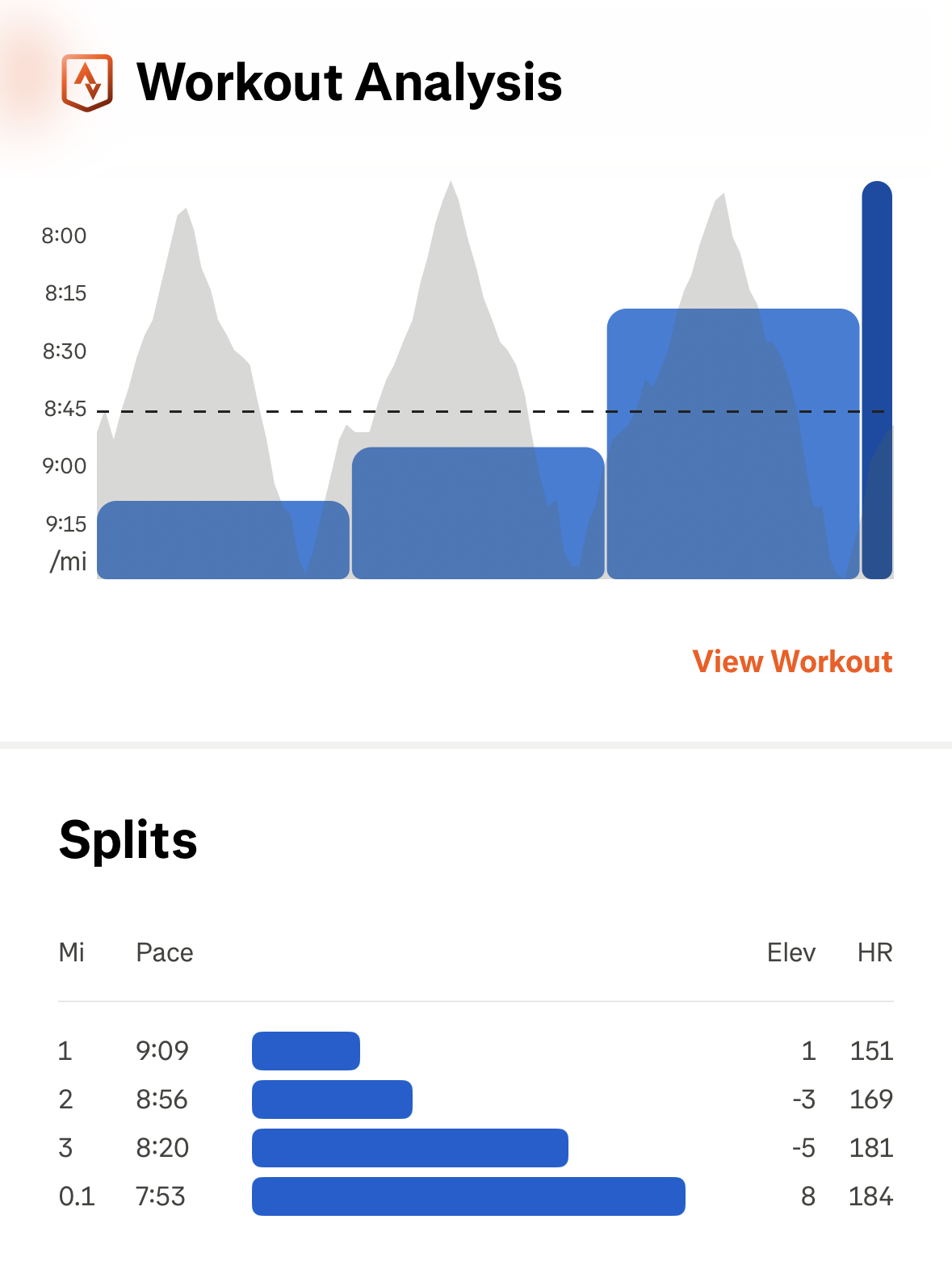
| Mile | Pace | HR |
|---|---|---|
| 1 | 9:09 | 151 bpm |
| 2 | 8:56 | 169 bpm |
| 3 | 8:20 | 181 bpm |
| 0.1 | 7:53 | 184 bpm |
The useful lesson was to look beyond one average number and consider how effort changed during the run. For easy running, the question is different: did the effort stay comfortable, and how did I feel afterwards?
"The pace stopped controlling you. You started controlling the pace."
ChatGPT feedback after the race-pace interval session
What This Means for Everyday Runs
You do not need to be preparing for an event to use this approach. Start with a simple purpose: keep an easy run genuinely easy, notice how you feel, and use the record to reflect on what suits you.
For me, useful questions became: could I talk comfortably? Did I feel more tired than expected? Was the weather different? Had I slept badly? Those details helped me put the watch data in context instead of judging a run by speed alone.
Slowing down or taking a walk break does not make an outing a failure. The aim here is a manageable routine that supports aerobic fitness, not a longer run or a personal best.
A Simple Prompt to Try
Clear instructions made the conversations more useful. Here is an adapted prompt focused on everyday aerobic fitness rather than race preparation:
I am an everyday runner who wants to improve aerobic fitness and make easy runs feel more comfortable. Help me reflect on my runs without focusing on pace targets, race times or longer distances. I will share screenshots and notes about effort, sleep and recovery.

Please always:
- Summarise the run in a simple table
- Record duration, heart rate where available and how the effort felt
- Use pace only as context, not as a target
- Compare with the previous runs I have shared
- Ask about missing context rather than guessing
- Help me notice when an easy outing felt harder than intended
- Consider rest and recovery, not just what run comes next
- Do not prescribe a universal heart rate range or diagnose fitness from a screenshot
- Explain uncertainty and flag when a qualified coach or clinician is needed
- Keep a summary I can save and bring to the next conversation
The last point matters because a saved summary is easier to check and reuse than a collection of screenshots. AI can misread numbers, so I check the log against the originals rather than assuming every interpretation is correct.
See my more detailed personal running log
| Run | Distance | Avg Pace | Avg HR | Type | Takeaway |
|---|---|---|---|---|---|
| Early Z2 | 4 to 5 mi | 12:50 to 13:10 | 127 to 130 | Easy | Stop-start, unstable |
| Mid Z2 | 4 to 5 mi | 12:45 to 12:55 | 127 to 128 | Easy | Better control |
| Recent Z2 | 4.88 mi | 12:25 | 128 | Easy | Stable HR |
| Easy run | 4.4 mi | 11:59 | 126 | Easy | Faster at lower HR |
| Race pace reps | 3 x 6 min | 9:04 to 9:15 | <165 | Quality | Pace becoming controllable |
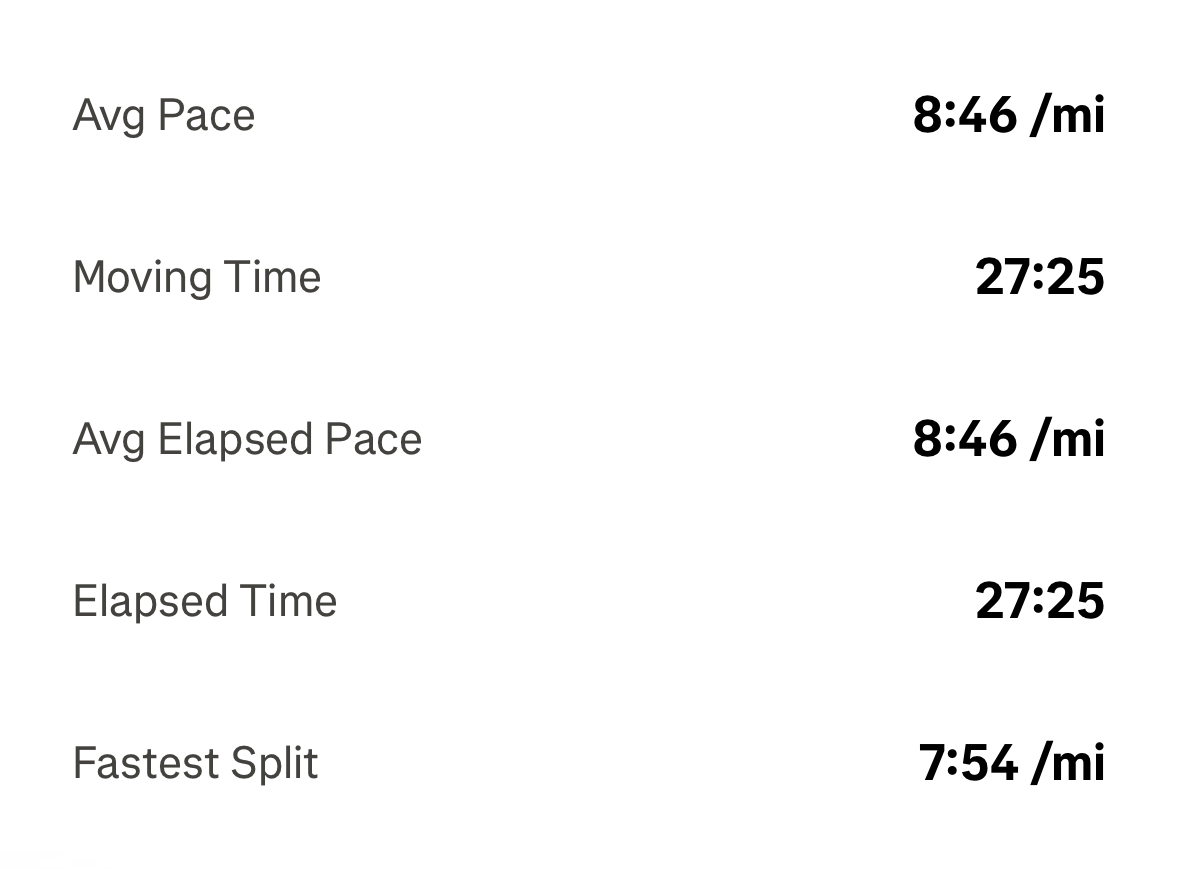
| Parkrun | 3.1 mi | 8:46 | 167 | Progression | Controlled start, strong finish |
What Changed Psychologically
The most important change was how I judged a run. Before, I would look at pace or wonder whether the activity looked impressive on Strava. That made it easy to overlook the value of a comfortable outing.
I started paying more attention to comfortable breathing, how I recovered, and whether an easy run had actually stayed easy. A run did not need to be faster or longer to feel worthwhile.
I stopped trying to prove fitness every day. That may have been the biggest improvement of all.
Most runners do not need more data. They need better feedback.
What This Means For AI Coaching
I do not think AI replaces great human coaches. But I do think conversational AI solves one major problem: feedback frequency.
For an everyday runner, the useful part can be having a simple way to review an outing and notice patterns. ChatGPT helped me organise screenshots and notes, question my assumptions and think about recovery. Its suggestions still needed checking against my own experience.
It did not just tell me what happened. It helped me decide what to do next.
The value was not that ChatGPT created a magical plan. The value was that it created a continuous feedback loop. Most training plans are static. This was adaptive.
Conclusion
The biggest improvement in my running did not come from a new watch, a new shoe, or a revolutionary training plan. It came from building a better feedback loop.
I used ChatGPT to reflect on easy effort, understand my heart rate patterns and give recovery more attention. The point was not to chase a pace or train for a longer event. It was to make everyday running feel more manageable while working on aerobic fitness.
The biggest change was being more patient and less judgemental about an easy run. Comfortable, consistent outings became worth doing in their own right.
Most runners do not need more data. They need better feedback. And, increasingly, that feedback can be conversational.
Frequently Asked Questions
Can ChatGPT replace a running coach?
No. It should not be seen as a direct replacement for a qualified coach. Its value is in creating a high-frequency feedback loop between runs, interpreting data you already have, and helping you make better decisions consistently.
Can ChatGPT analyse Strava screenshots?
Yes. Clear screenshots can help it summarise a run and highlight patterns to discuss. Add notes about how the run felt, sleep and recovery, and check any extracted numbers. A screenshot cannot establish your training zones or diagnose your fitness.
How many screenshots do you need per run?
Usually two or three: a headline summary, mile splits, and optionally an elapsed pace or heart rate graph. The splits screenshot is the most important for analysing whether the run was controlled or drifting.
What is Zone 2 running?
Zone 2 usually refers to low-intensity aerobic running at an easy, sustainable effort. For an everyday runner, comfortable breathing and being able to hold a conversation are useful practical cues. Heart rate zones vary by person and by the system used; there is no single bpm range everyone should follow.
How did ChatGPT support your approach to aerobic fitness?
It helped me review heart rate patterns, notice when easy runs felt too hard and take recovery more seriously. It supported reflection and consistency rather than providing proof of a physiological improvement. I found that more useful than chasing a faster pace after every run.
Global Head of Performance Marketing at IDX